

The Online Writing Instrument Magazine -

Postal Reservoir Pen c1925-1928
by Jim Mamoulides, January 21, 2010
 Postal Reservoir Pen c1925-1926
I find the best things randomly in antique store trips. One year we decided to take a trip to the North Carolina coast and discovered that New Bern is an antique hunter's haven. There are several nice shops downtown, and nearly every one of them had pens. One shop must have been the drop off point for a collector, because almost everything they had was in the original box, in very nice shape, and priced accordingly. Although there were some nice items there, I was not in the mood to pay retail for something I might have to fix up later. Most of the other shops had pens in the more usual way I find them, in a display case either laying on a shelf tray or in a cup.
One store looked like it had previously been a grocery or large five and dime, with a big, all glass storefront, drop ceiling and bare fluorescent lighting inside. The aisles were laid out in grocery fashion, front to back, with lots of shelves chock full of stuff along with locked display cases with the smaller or more valuable items. This was one of the stores where pens were in several places and so I wandered it first and then had one of the clerks bring the keys to the cases where I saw something interesting. This particular store was a goldmine, with many interesting pens that you will see this year and at very cheap prices. Part of the reason is that most of the pens were just caked over with dried ink, sticker glue and other things that hid the fact that many were actually very unusual finds.
 Postal Reservoir Pen c1925-1926
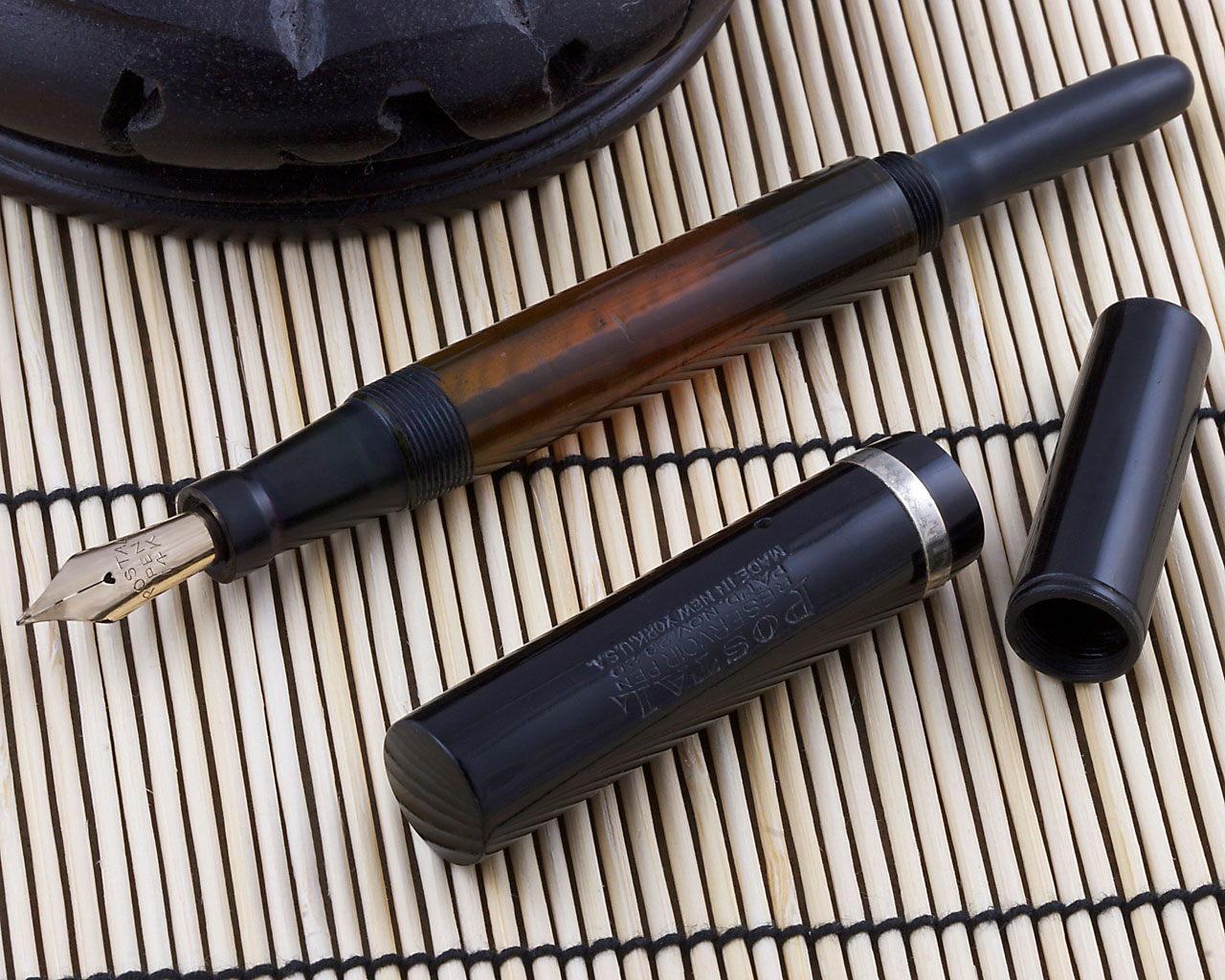
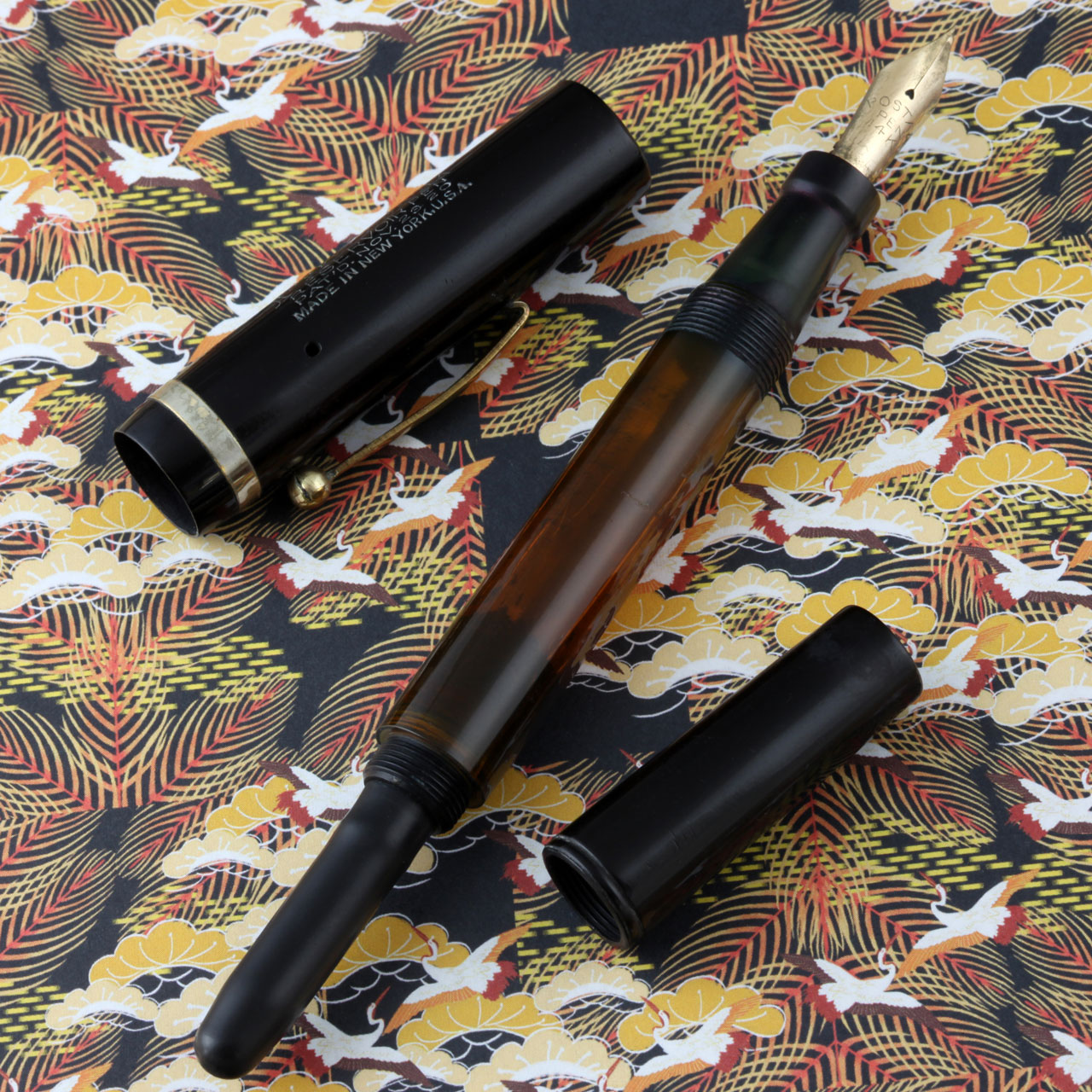
A pen you just don't see every day is a Postal Reservoir Pen. This gigantic pen (think size between a Pelikan 800 and 1000), was made in the 1920s, and according to Frank Dubiel's Fountain Pens: The Complete Guide To Repair & Restoration, this is the first bulb-filling pen to use a breather tube. The pen is filled by removing the blind cap from the end of the barrel and repeatedly squeezing the rubber ink sac until ink filled the barrel. The breather tube runs the length of the transparent barrel and just into the opening of the ink sac. The breather tube regulates the flow of ink and air into and out of the pen, facilitating a complete fill.
Interestingly, Dubiel points out in his repair guide, that this system is essentially the basis for the later Parker Vacumatic and Waterman Ink-Vue pens, which draw ink into the barrel, regulated by a breather tube, and use a rubber sac or diaphragm that is manipulated by a lever or plunger unit instead of a manually squeezed bulb, as in this pen.
There is not a lot of manufacturer information on Postal Reservoir Pens, but print advertisements show the pen was offered at least from October, 1925 to April, 1928. The company marketed the pen by mail order only and by cutting out dealers and wholesalers was able to price the pen much cheaper than top brand pens. The large Postal pen sold for $2.50 at a time when the Parker Duofold sold for $7.00. Postal also offered five 50 cent coupons with each pen purchase to each buyer that they could sell to prospective buyers and effectively get the pen they originally purchased for free, making their customers into their salesforce. They also offered a money back guarantee for a short time after purchase.
Postal advertisements showed the men’s pen full size and called out five key features:
- You can see right through this pen! The transparent barrel allowed the user to always know how much ink was left
- You can even step on it without injuring it. The celluloid construction was touted as unbreakable
- The easiest of all pens to fill. The bulb filler was arguably simpler than any other system.
- It holds 3 to 4 time more ink than any other self-filling pen. Unlike sac pens, the Postal uses the entire barrel to hold ink. Postal claimed it could hold a month’s worth!
- It’s the smoothest writing pen you ever used! Claiming their 14 karat gold nib was special.
 Postal Reservoir Pen c1925-1926
Identification guide and features:
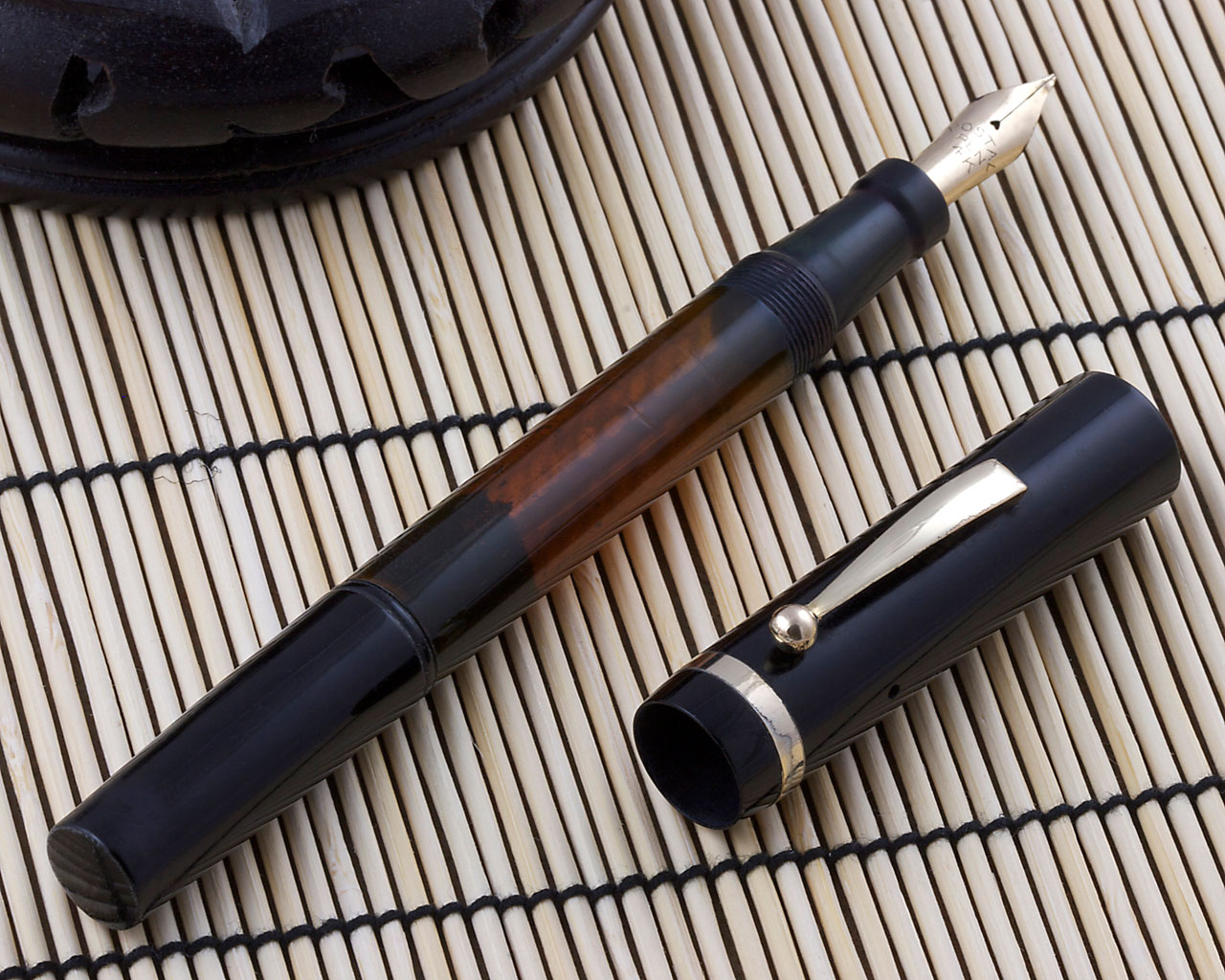
This is the larger size Postal Reservoir Pen, introduced in about 1925, and initially sold only by mail order for $2.50. Postal Reservoir Pens came in only two sizes, a larger pen with a pocket clip for men and a smaller ringtop pen for women. The Postal Reservoir Pen is a bulb filler with a long breather tube that extends well into the clear celluloid barrel. Because the barrel is the ink reservoir, the pen holds a lot of ink. The Postal Reservoir Pen is very large even by today's standards, being 5 11/16 inches long with the cap on and 6 15/16 inches long with the cap posted on the end of the barrel.
- Black celluloid cap and barrel end cap with clear barrel
- Gold plated trim
- Cap unscrews
- Large 14 karat gold nib stamped POSTAL PEN 14K
- Unknown number of nib grades
- About 5 11/16 inches long with the cap on
- Bulb filler with breather tube
- Retail price $2.50
Performance
There are two principal issues with bringing one of these pens back into service. First is a clogged breather tube, since it is the ink pathway through the feed into the barrel. If the tube is clogged, the pen won't fill, nor will it write. A thin wire has to be used delicately to clean out any blockage, and even that can be tricky. The second problem, as seen on this example, is getting the inside of the barrel clean. Since the section is sealed onto the front of the barrel, it's not simple to get off and the clear plastic barrel is fragile. Don't be surprised to see hairline cracks. If you can get the pen operating, eventually the process of filling and expelling the pen should work most dried ink problems out and the barrel should start to clear up. Early clear plastics often amber with time, as seen here.
 Postal Reservoir Pen c1925-1926
This Postal Reservoir Pen is a large, yet lightweight pen, weighing 0.7 ounce and being 5 11/16 inches long with the cap on and 6 7/8 inches with the cap posted on the end of the barrel. This is a really big pen for the 1920s, a little longer than a Pelikan 800. The uncapped pen is plenty long by itself and fits the hand nicely unposted.
 Postal Reservoir Pen c1925-1926
If you have used a Parker Vacumatic, then this pen will remind you how long it takes to fill one of those. Basically, remove the blind cap, dunk the section in the ink, and start squeezing the ink sac, watching the ink gradually fill the barrel. It takes a LOT of squeezes to get this done. The large 14 karat gold nib is a slightly flexible fine and writes nicely, but is not finished at the same level as the major brands. This is a pen for someone who does not want to refill very often. I see it more as a novelty than a daily user, especially as the plastic is fragile and I don't want to further stain the already ambered barrel.
References
Boys Life, October, 1925
Boys Life, November, 1925
Boys Life, December, 1925
Boys Life, May, 1926
Boys Life, August, 1926
Boys Life, October, 1926
Boys Life, November, 1926
Boys Life, December, 1926
Boys Life, March, 1927
Fountain Pens: The Complete Guide to Repair and Restoration by Frank Dubiel, © 2002 United States
Popular Mechanics, February, 1926
Profile: The Postal Reservoir Pen, by Richard Binder, © 2014 RichardsPens.com
The Rotarian, July, 1927
The Rotarian, April, 1928
Interact
Comments on this article may be sent to the author, Jim Mamoulides
Pen Clubs


PenHero on Social Media


Pen Forums